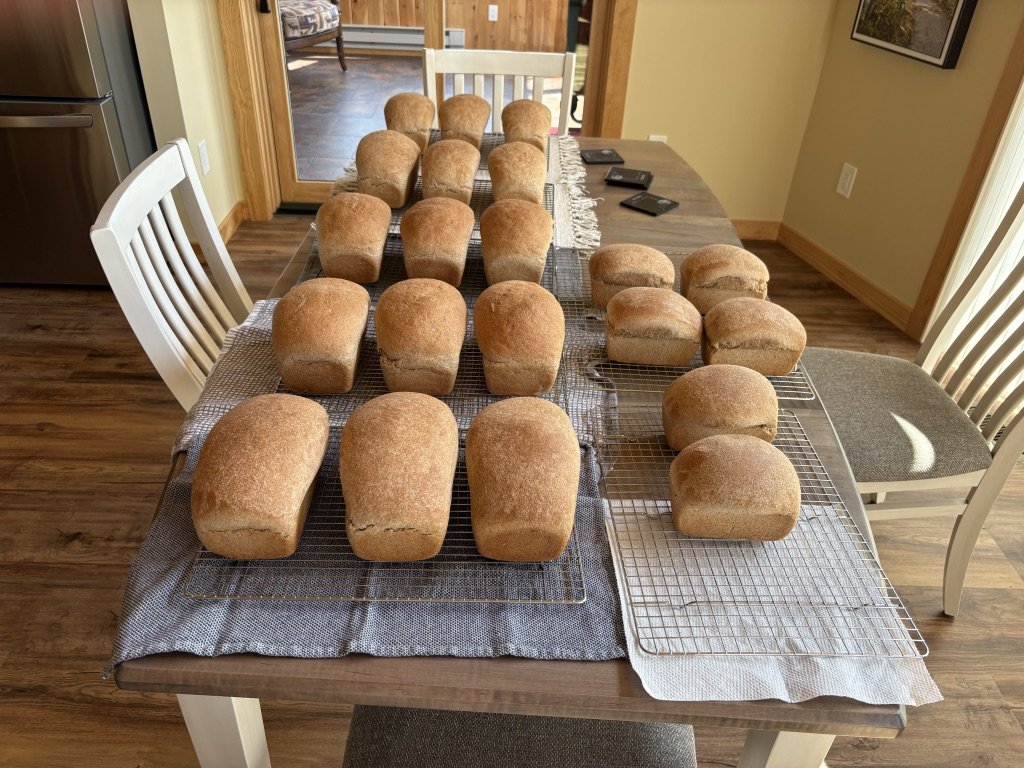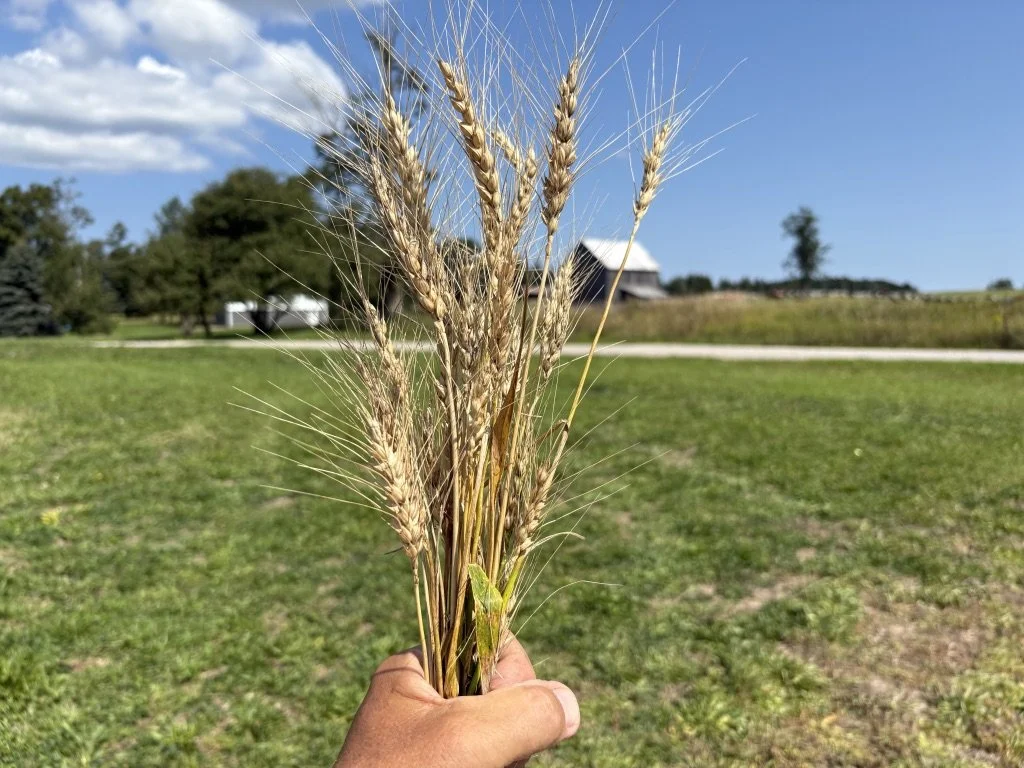
In 2023 I planted a small patch of wheat near my garden to see if I could harvest enough for bread. The experiment succeeded beyond expectations.
That first year I cut the wheat with a sickle and threshed it in a 55‑gallon barrel using a chain driven by an electric drill. I cleaned the grain by pouring it between buckets on a windy day—the berries dropped straight down while the chaff blew away.
I bought a small mill to grind the wheat into flour and then spent time learning to bake whole‑grain bread, a process quite different from using commercial bread flour. Fortunately, every attempt was edible!
In 2025 I expanded production and purchased a small thresher and grain cleaner, which now take the wheat from field to mill‑ready with far less labor.
Historically, wheat was cut by hand with a sickle or wheat cradle, tied into sheaves, dried, and hauled to a threshing barn. There the sheaves were beaten with flails to loosen the grain, which then had to be winnowed to remove the chaff.
The 1800s brought dramatic change: McCormick’s horse‑drawn reaper cut and bundled grain, reducing manual labor. Mechanical threshers and winnowers soon followed, leading to modern agriculture. Eventually the combine arrived, integrating reaping, threshing, and winnowing into one machine operated by a single person.
The sickle mower cutting wheat
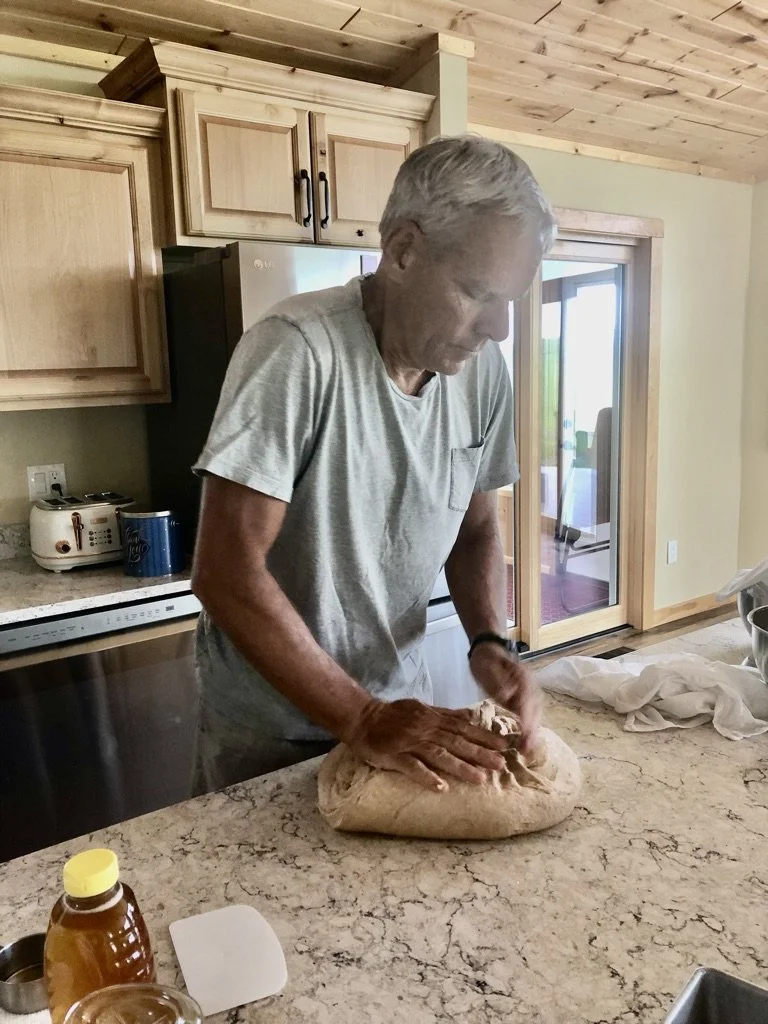
Baking with whole grain wheat flour requires a little different procedure than baking with store bought bread flour. The difference occurs because all three parts of the grain are present whereas commercially available bread flour has the bran and germ portion removed. Doing so lengthens the shelf life of the flour but removes essential oils, minerals, and vitamins, some of which are added back in to commercial flour afterwards.
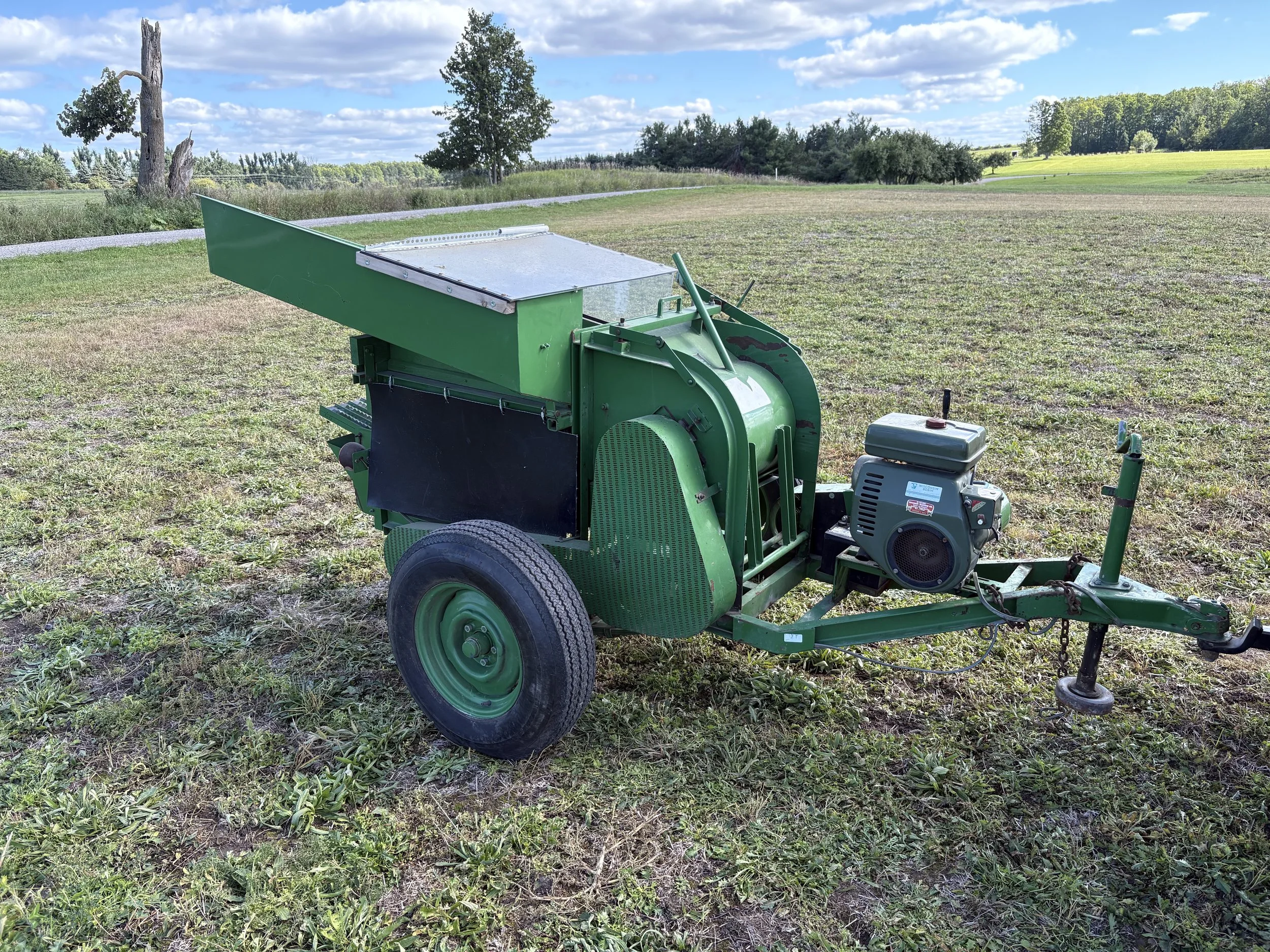
The threshing machine
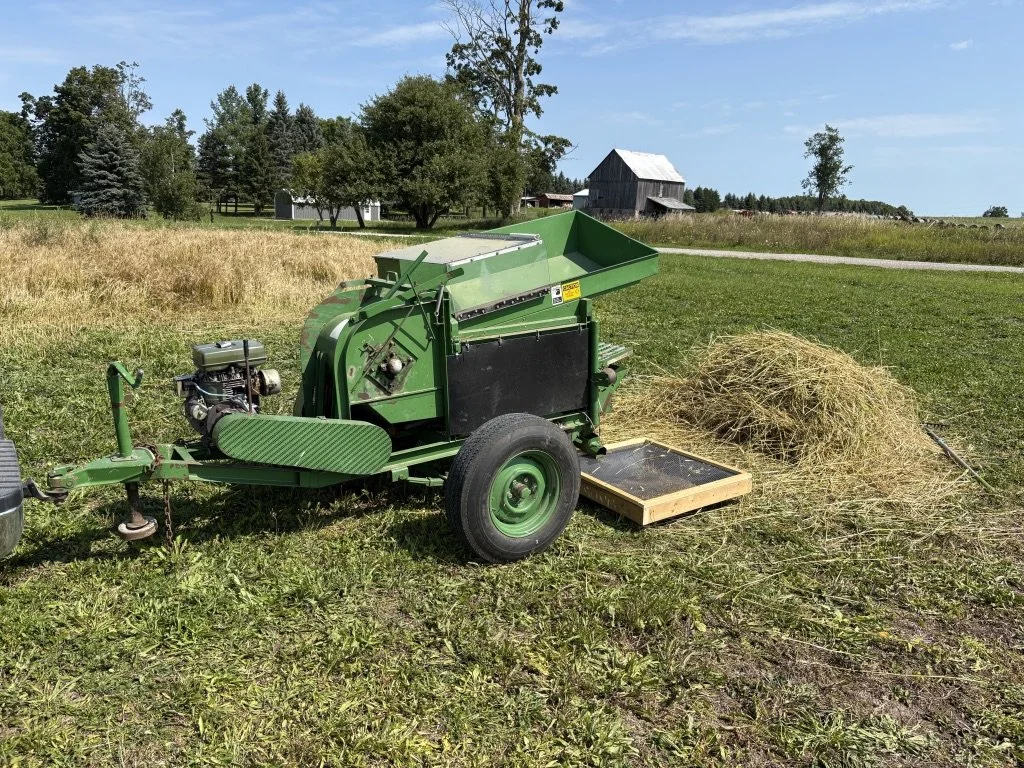
Wheat stalks are fed into the thresher where the berries are separated from the stalk which piles in the back. This is straw.
Thresher in action
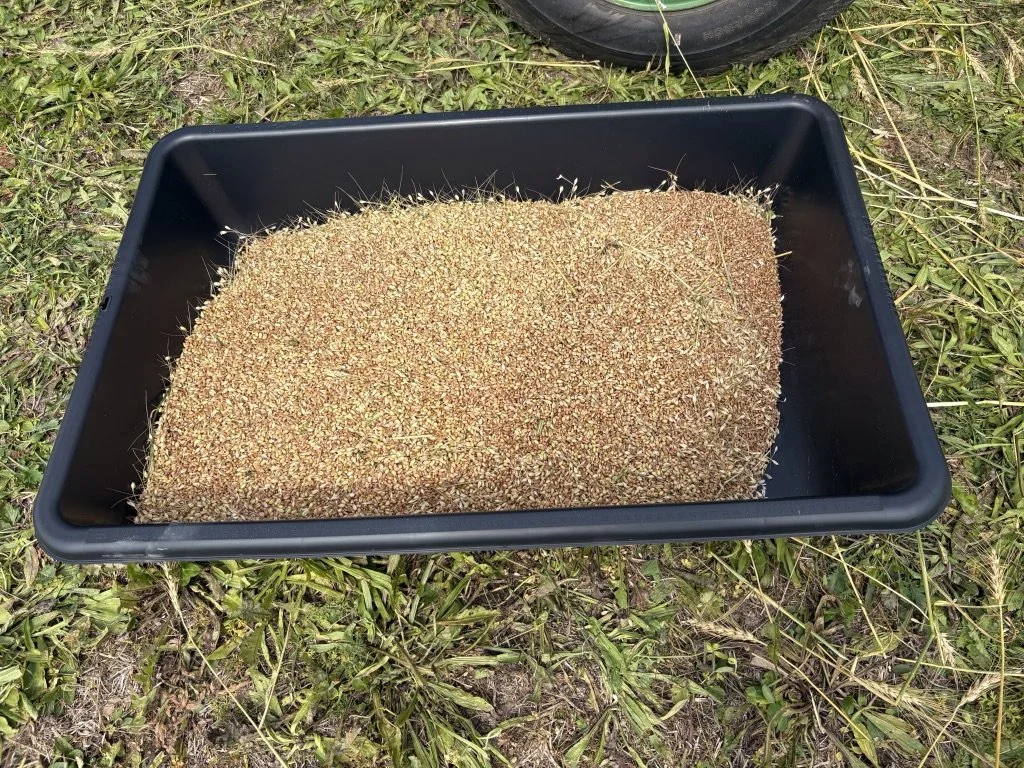
Wheat berries as they exit the thresher. Ready for winnowing.
The grain cleaning machine winnows the wheat berries from the chaff
Clean grain ready for final drying and then storage until it is time to be milled into flour
When the grain is cleaned after winnowing, it is carefully measured to ensure the moisture content is appropriate for long term storage. Because whole wheat berries contain all three parts of the wheat berry (the germ, endosperm, and bran) essential oils can turn rancid in as little as a few weeks after milling into flour. The whole wheat berry can be stored prior to milling into flour for several years if stored properly.